What an indoor grill actually does
An indoor electric grill is closer to a heavy fry pan than to a charcoal kettle. The heat comes from a resistance bar tucked a finger’s width below a cast or pressed plate, so food cooks by conduction first and radiant heat only once the surface itself is hot. Set the dial, wait for the indicator light, then place the steak. The element cycles on and off to hold a target band rather than chase peaks, so surface temperature stays steadier than most stovetop pans.
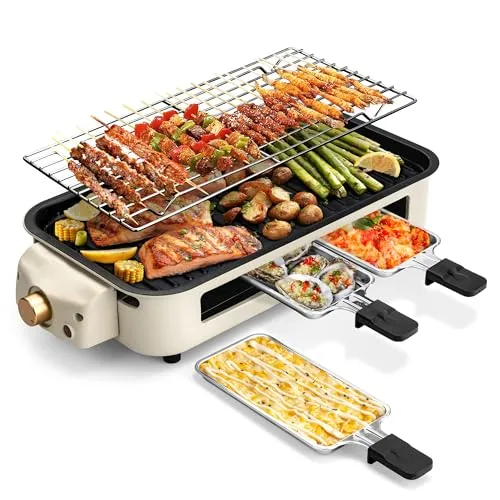
Smoke on an indoor grill comes from two places: droplets of rendered fat that hit the plate and vaporize, and traces of oil that burn on uncleaned patches. There is no open flame to ignite flare ups, but the vapor still smells like barbecue because the same fats are breaking down. A decent design gives drippings somewhere cooler to go. Our grills carry slot trays under the 16 x 9 inch plate, and coat both with a non-stick layer for wipe-down cleaning.
The numbers that matter are inside the food, not printed on the knob. USDA FSIS lists beef, pork and lamb steaks and roasts at “145 degrees F (62.8 degrees C) and allow to rest for at least 3 minutes”, while poultry reads “165 degrees F (73.9 degrees C)”.
The plate on many electric grills may touch 450 F when empty, yet a thick chicken thigh can sit at 120 F in the center, so keep a probe thermometer on the counter and treat the dial only as a way to manage browning.
Preheating matters for flavor, but attention matters for safety. The U.S. Fire Administration writes, “Stand by your pan. If you leave the kitchen, turn the burner off.” The rule applies here exactly. An electric grill keeps heating unless you turn or unplug it, and the fat tray can overflow in ten minutes if you forget a pack of streaky bacon. A sound design starts with a cool-touch handle, the part you grab while thinking about everything else.
Heat settings and why a fixed element burns food
An indoor grill makes heat by pressing a metal element against the plate. The element does not move and it runs the same shape every session. When the controller says 400 degrees the coil will surge past that, cooling only when the thermostat tells it to sleep. Food that sits directly above the hottest bend of the element meets that spike first. A steak placed one inch to the side may start 30 degrees cooler. Understanding that stripe of higher heat is the first defense against burnt patches.
A home range burner can be nudged down in seconds. A grill with a fixed element cannot, so timing replaces knob turning. We preheat our 16 by 9 inch non stick plate for five minutes, then drop thick items in the center and thinner cuts toward the edges. None of our five grills states an adjustable thermostat, so the dial manages browning rather than a set temperature, and the food is what you measure. Move chicken out of that crest once the surface colors instead of chasing a cooler setting.
Internal temperature settles questions about doneness. The United States Department of Agriculture writes that beef, pork and lamb steaks and roasts must reach 145 degrees F (62.8 degrees C) and allow to rest for at least 3 minutes. Poultry must reach 165 degrees F (73.9 degrees C). A slim instant read probe shows those numbers faster than cutting into meat and losing juices. Place the tip in the thickest point, not against the grill plate. Because hot spots move, repeat the measure after a one minute rest off heat.
The last reason food burns is distraction. The U.S. Fire Administration advises, Stand by your pan. If you leave the kitchen, turn the burner off. An indoor grill shares that rule even though it plugs instead of flames. Keep tongs, seasoning and a clean plate within reach before the cord meets the outlet. Set a timer loud enough to cut through conversation. When a recipe calls for a ten minute cook, lift the lid at five, shift pieces away from the element line and close again.
| Model | Plate | Adjustable heat | Price |
|---|---|---|---|
| 2-in-1 Electric Indoor Grill, 16 x 9 in plate, Beige | 16 x 9 in | Not stated | $44.99 |
| 2-in-1 Electric Indoor Grill, 16 x 9 in plate, Beige | 16 x 9 in | Not stated | $51.84 |
| 2-in-1 Electric Indoor Grill, 16 x 9 in plate, Black | 16 x 9 in | Not stated | $58.98 |
| 2-in-1 Electric Indoor Grill, 16 x 9 in plate, Black | 16 x 9 in | Not stated | $44.99 |
| 2-in-1 Electric Indoor Grill, 16 x 9 in plate, Red | 16 x 9 in | Not stated | $44.99 |
Smoke: where it comes from and how to cut it
Most of the smoke that rises from an indoor grill comes from fat and juices that miss the hot plate, drip into the catch pan, then hit metal that is hotter still. The splash vaporizes, the sugars carbonize, and a thin mist rolls up before the kitchen fan can catch it.
A small share comes from bits of last week’s meal still clinging to the plate. If they char at start-up, odor follows fast. Knowing those two sources gives us two simple levers: manage drips and start with a clean surface.
Control begins before the first sizzle. Trim excess fat, pat steaks dry, and brush only a whisper of oil with a high smoke point, such as avocado or canola. Heavy marinades that rely on sugar taste good but blacken fast, so add them in the last few minutes.
Our 16 x 9 inch non-stick plate on every Pukomc indoor grill releases food quickly, so less oil is needed and fewer fragments stick behind. The cooler tray slots below the plate catch most runoff, lowering the chance of it burning back up.
Even the best prep fails if yesterday’s grease is still parked on the grill. While the plate is warm, not hot, swipe it with a soft sponge and mild dish soap. Empty the drip drawer before it cools and solidifies, then wipe the rim where stray splatter hides. A monthly deep scrub with a nylon brush reaches the tiny channels around the heating track. Skip aerosol cooking sprays. They leave a film that polymerizes above medium heat and smokes sooner than any natural oil.
Ventilation finishes the job. Open a window or run the hood the whole time, not just at start. If smoke still builds, lower the heat for half a minute and let the cloud lift before you flip. The U.S. Fire Administration gives the clearest rule for any hot surface: “Stand by your pan.
If you leave the kitchen, turn the burner off.” Check temperature, not color: beef or pork steaks hit “145 degrees F (62.8 degrees C) and allow to rest for at least 3 minutes”, poultry needs “165 degrees F (73.9 degrees C)”. Aim for the number. Avoiding an overheated plate controls smoke too.
The temperatures that make food safe
From an engineering point of view, safety is a temperature and a time, not a color. The USDA Food Safety and Inspection Service writes that beef, pork and lamb steaks and roasts reach safety at "145 degrees F (62.8 degrees C) and allow to rest for at least 3 minutes".
That short rest matters. Pull the steak at 145, move it to a plate, and the remaining surface heat finishes any microbes that survived the sear. Skip the rest and you have hit the figure but missed the full kill step.
Poultry demands a higher stop point because its muscle structure and typical grinding leave more pathways for bacteria. The same chart sets the target at "165 degrees F (73.9 degrees C)". Dark or white meat, boneless or whole, that single figure covers it. Stick the probe into the thickest part of the thigh without touching bone and wait for the numbers to settle. If the display bounces, close the lid for another minute and measure again. You are looking for certainty, not an average of guesses.
An electric contact grill heats from below through an aluminum plate that stays hot even after the power light goes dark. On our five indoor models, the plate is 16 x 9 inches, large enough for four steaks or two spatchcocked Cornish hens. Preheat until the ready lamp shows, then give it another minute for the metal to equalize.
Slip a thin thermometer probe sideways into one piece while it still sits on the plate. Once the center shows the USDA figure, lift, tent loosely with foil and let the three-minute rest happen.
Safety does not end at the table. Raw juice on tongs or a board can pull the work back below the line. Rinse or swap utensils the moment they touch undercooked meat and wipe the plate rim before it drips onto the counter. Fat that pools on the grill tray keeps heating after the food comes off, so empty it quickly and wash with hot water before the next batch. The U.S. Fire Administration puts it plainly: "Stand by your pan. If you leave the kitchen, turn the burner off."
145 degrees F (62.8 degrees C) and allow to rest for at least 3 minutes
USDA Food Safety and Inspection Service, Safe Minimum Internal Temperature Chart. Read 15 August 2026.
Poultry is the exception worth memorising
Every other protein on the dinner list gets a little leeway. Beef, pork and lamb steaks or roasts can come off the heat at "145 degrees F (62.8 degrees C) and allow to rest for at least 3 minutes". Poultry is different. The number the USDA prints for chicken or turkey, dark or white, bone-in or boneless, is a single, higher point: "165 degrees F (73.9 degrees C)". Miss it and the risk climbs fast, because the pathogens that live in birds die only at that higher threshold.
On an indoor grill the margin for error is tighter than on a range pan. The plate is flat, the lid reflects radiant heat and the juices have nowhere to drain except the slot tray. If the probe shows anything under 165, close the lid and keep going, then test again in a second spot.
Carry-over heat will add a little after the lid comes down, but the reading you act on is 165. The carry-over comes from below, conducted through the 16 x 9 inch plate rather than glowing charcoal, so it is steadier but lasts a shade longer.
Poultry also smokes earlier than beef because the skin carries more rendered fat. That fat vaporises when it meets the hot steel, then chars on contact with the plate edge. Two small moves cut the haze: trim the flap of skin that hangs past the meat and pat each piece dry after marinating.
If you use a sweet glaze, wait until the last two minutes, lift, brush, and finish with the lid half open so sugar does not burn under trapped heat. The slot trays under the plate are there for exactly this: fat that leaves the food should end up in a tray you can empty, not pooling on hot steel.
Finally, vigilance. The U.S. Fire Administration writes it as plainly as it can be written: "Stand by your pan. If you leave the kitchen, turn the burner off." An electric grill counts. Unplug when the last piece clears the plate, wipe while it is still warm, and empty the tray before the fat sets. Small habits, but they make the next cook quicker and keep that 165 reading in the safe column.
165 degrees F (73.9 degrees C)
USDA Food Safety and Inspection Service, Safe Minimum Internal Temperature Chart. Read 15 August 2026.
Fire safety on a countertop
Most household fires that start in a kitchen begin with unattended cooking. The U.S. Fire Administration puts it in five plain words: "Stand by your pan. If you leave the kitchen, turn the burner off." An electric countertop grill still draws up to 1500 watts, as much heat as a full-size range element, so the same rule applies. Set a timer every time you walk away, even if it is only to answer the door. Returning to a cool plate is cheaper than cleaning smoke from cabinets.
Clear space around the grill before you plug it in. Give at least four inches at the sides and back so wall paint and outlets stay below their limit. A stone or composite countertop is ideal. A laminated surface needs a dry trivet under the feet to avoid blistering.
Keep the cord short and straight, never under a cutting board or towel, and avoid extension cords that can overheat long before the breaker trips. One grounded outlet, one grill, nothing else sharing that socket: a simple rule that prevents load stacking.
Grease, not grills, starts most countertop flare-ups. Empty the drip tray after every use. Fat left to pool near a heating coil can reach its flash point faster than the steak above it sears. A spoon of water in the tray during cooking slows evaporation and keeps residue from carbonizing on the metal.
Trim excess skin from poultry, blot marinades before laying food down, and choose oils with a smoke point above 400 degrees F when brushing the plate. Steam will rise but blue smoke that stings the eyes is a warning to clean.
Control the temperature and you control the risk. Insert a probe thermometer sideways into the thickest part of the meat and wait for a steady readout. The USDA says beef, pork and lamb steaks and roasts reach safety at "145 degrees F (62.8 degrees C) and allow to rest for at least 3 minutes".
Poultry must reach "165 degrees F (73.9 degrees C)". Our five indoor grills hold a steady surface heat, but the food decides when it is done, not the dial light. After the plate cools, wipe it while it is still moist and unplug before storing.
Stand by your pan. If you leave the kitchen, turn the burner off.
U.S. Fire Administration, Cooking Fire Safety. Read 15 August 2026.
Cleaning a plate that lifts out
A removable plate changes the after-dinner routine. Step one is patience: pull the plug and let the grill drop below 140 degrees F so steam no longer spits when water touches the surface. The frame may feel only warm, yet the metal tracks that hold the plate store heat longer.
Use a dry mitt, lift at the tabs, and tip any pooled grease into a can. Cooling first keeps non-stick chemistry intact and also prevents micro warping that can show up as a raised patch in the center next time you cook.
With the plate on a flat towel, run a nylon spatula across the ridges to remove the browned protein that gives off smoke on the second use. Avoid steel wool. It scuffs the coating and lets oil creep under the film. Warm water plus a drop of mild detergent works for most sessions. If sugar or barbecue sauce has carbonized, sprinkle baking soda, add a splash of hot water, wait five minutes, then wipe with a soft sponge in the direction of the grill marks.
Drying matters as much as washing. Water left in the fat-run channels can flash to steam the next time the thermostat climbs, lifting beads of oil and turning them into haze over the counter. After rinsing, shake excess water, pat the plate, and stand it upright so air reaches both faces. When you store it, slip a sheet of unprinted paper between the plate and the drip tray to catch the thin line of oil that migrates from the rim during a long week in the cupboard.
We build five indoor grills, each with a 16 by 9 inch non-stick plate that lifts out exactly as described, and the size drops into a standard sink without tilting. The 2 in 1 body holds the plate and a drip tray, so cleaning both resets airflow and cuts smoke on fatty cuts. After the parts are dry, return them only when the control knob sits at off. As the U.S. Fire Administration reminds every cook, Stand by your pan. If you leave the kitchen, turn the burner off.
What we would ask before ordering
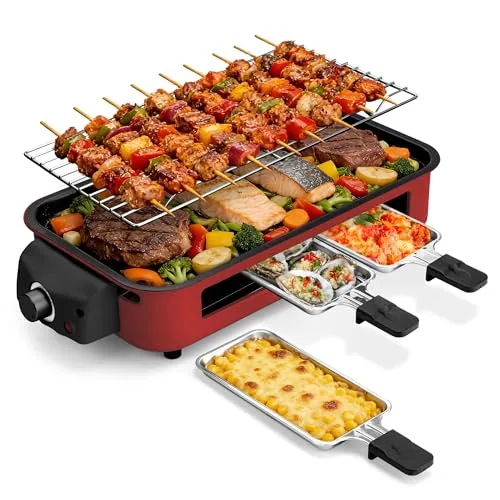
Before we add a grill to the cart, our first check is space. A 16 by 9 inch plate fits four chicken breasts or a row of sliced peppers without crowding, yet the housing around it usually overhangs that rectangle. Map the footprint on the counter and under the cupboard hood, then leave two inches at the rear for the cord to clear the wall.
If the outlet already runs a kettle or a deep fryer, plan to use a different circuit because resistive heaters draw heavily and a shared breaker may trip mid-cook.
Next comes heat control. Few makers publish the real surface temperature at each mark on the dial, so we ask. When the answer is vague, we keep a probe thermometer on hand and calibrate once the machine arrives. The USDA FSIS table lists "145 degrees F (62.8 degrees C) and allow to rest for at least 3 minutes" for beef, pork and lamb steaks and roasts, and "165 degrees F (73.9 degrees C)" for poultry. Knowing the plate’s high setting will pass those values lets you sear without guesswork.
Smoke is not always a fault. Fat that lands on a hot element will char faster than fat that drips into water or a cooled tray. We therefore ask to see the tray design. Does it sit directly under the plate, does it detach without tilting hot grease toward you, and is the clearance high enough to stop splatter from reaching the coils.
The U.S. Fire Administration says, "Stand by your pan. If you leave the kitchen, turn the burner off." An indoor grill is no exception even when the coils hide under metal.
Last, we look at cleanup. A non-stick plate wipes easily, but only if it lifts out as a single piece. Hinged or fixed plates force you to reach around switches with a wet sponge, and that shortens the life of circuitry. We design our five-model line with a removable plate and a separate tray so the two parts reach the sink in one trip, then stack flat at the side of the dish rack.
Ask any maker about replacement plates, availability of silicone feet, and the length of the power cord before you press pay.